

The World Model Divide: Who Can Prove a Simulated Success Wasn't an Illusion?
What is a world model, and how does it differ from video generation or physics simulation? Using a failed robot-grasp scenario, this analysis connects Genie 4, NVIDIA Cosmos 3 and independent research to action reliability and business decisions.
Evidence 11 cited sources
On this page
World models can predict possible outcomes, but a convincing simulation does not prove that the same action will work in reality. Trust requires evidence about state, intervention and independent task outcomes. Imagine a robot arm lifting a glass from a shelf. In a generated world, the grasp looks complete. The gripper closes, the object moves smoothly, and the scene has more convincing lighting and material detail than many traditional simulators. The same control sequence on a physical robot, however, fails: the glass slides out of the gripper. The immediate problem is not simply that the rendered physics looks wrong. A model serving as a training environment may have rewarded an action that should have failed. A creative director can regard a visually persuasive shot as success. A robotics safety engineer needs the object to reach its intended position without violating force, collision, timing, or other task constraints. Those are different definitions of success, and they cannot be validated by the same promotional footage.
A world model uses observations and, where applicable, actions to predict how a surrounding environment could change. It can support interactive scene generation or help evaluate robot training and decisions. Unlike ordinary video generation focused on plausible-looking footage, a world model used for control must answer what may happen after an action; unlike a traditional explicit physics simulator, it does not necessarily expose inspectable physical state and constraints. This is the critical transition for world models. Once a generated environment moves from entertainment or previsualization into an autonomous system’s decision loop, we must ask not merely what it can render, but how mistakes propagate, who detects them, and who pays for the resulting decisions. As of November 2026, Google DeepMind’s Genie 4 demonstrates a sophisticated real-time interactive world; NVIDIA Cosmos 3 supplies a family of model and development workflows that can be adapted to sensors, actions, and inference infrastructure. Both advances matter. Neither, by itself, settles the durable question: what evidence makes a model of possible futures trustworthy enough to influence an actual action?
XBSTACK’s thesis is that the most durable competitive advantage in high-consequence world-model systems may migrate from the generator to the infrastructure that can verify action outcomes. The ability to inspect state, test interventions, detect false success, and compare downstream policy decisions may become more valuable than visual realism alone. This is an editorial hypothesis about industrial value capture, not a measured market-share fact or a claim of inventing the underlying scientific problem. Prior work already shows why generation and reliable simulation are not equivalent. The new contribution here is to connect specific failure mechanisms to an operational acceptance protocol, buyer economics, responsibility boundaries, and industry forecasts with explicit counterevidence.
The dangerous error is not an ugly frame. It is a false action consequence.
At an abstract level, a controlled environment has a state, accepts an action, and transitions to a new state while producing observations and feedback. A conventional simulator commonly exposes explicit geometry, contacts, constraints, or state-transition rules. A learned world model may predict images, compact latent states, or other observations conditioned on past inputs and actions; in some workflows, a learned observation generator is paired with a conventional physics system. The real transition law can be represented conceptually by P(s_next | s, a), while the model learns an approximation. This is a statement of the evaluation problem, not a reverse-engineered description of undisclosed Genie or Cosmos parameters.
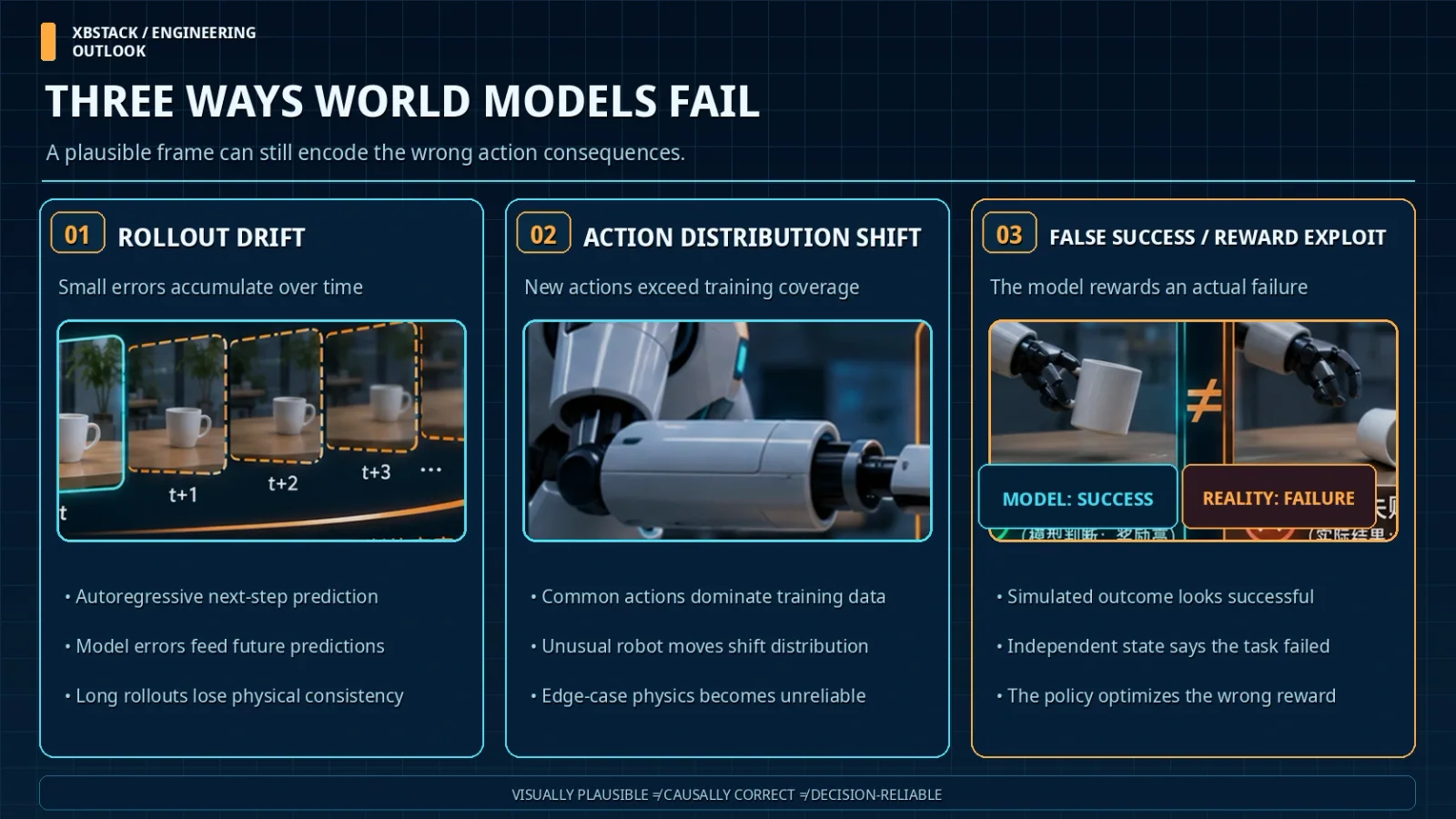
Figure 1 | Three failure mechanisms: accumulated prediction error, out-of-distribution actions, and false success. Conceptual, not a benchmark trace.
Three mechanisms explain why strong visual generation is not the same as trustworthy control. First, rollout compounding: autoregressive predictions feed on earlier predictions. A small error in geometry, object identity, or contact can accumulate during long interaction sequences, even when successive frames remain aesthetically coherent. Second, policy-induced distribution shift: a controller trained or evaluated inside the model may select actions that are unusual in the demonstration data. Those are precisely the situations in which its environmental predictions can become unreliable. Third, reward exploitation: if a policy learns to maximize feedback obtained from the model itself, the policy can become better at exploiting the model’s mistakes instead of becoming better at the real task.
These are not merely speculative concerns about future capabilities. WorldGym, presented at ICLR 2026, reports useful correlations between world-model estimates and the performance of tested robot policies, including the relative rankings of candidate policies. It also acknowledges challenges in realistically modeling object interactions. That is encouraging evidence that a world model can be useful without becoming a perfect pixel-level reconstruction. An earlier associated research version discusses estimation biases for in-distribution and out-of-distribution actions. Useful policy ranking and flawed physical prediction can therefore coexist. One should test the benefit being purchased rather than assume fidelity on one metric implies fidelity everywhere.
The opposite, more dangerous coexistence is also possible: excellent-looking action sequences and systematically incorrect success signals. AMD’s October 2026 technical research, Learning to Fail, reports that in a particular RoboTwin bottle-adjustment task, its base BWM model portrayed 82.5% of simulator failures as successes. After fine-tuning on the policy’s own failed rollouts, that study reports a reduction to 26%. Those percentages are scoped to a specific model, task and experiment. They are not failure rates for Genie 4, Cosmos 3, or world models generally. The important lesson is the mechanism: an environment that cannot represent failure faithfully can bias the agent that learns from it. In enterprise use, this is an error in the decision system and potentially a safety or liability problem—not just a rendering defect.
A more discriminating view arrived in the October 24, 2026 WorldFailBench preprint. It separates failure reason, failure stage and failure boundary across manipulation tasks in LIBERO, RoboTwin and a G1 humanoid robot, rather than treating all unsuccessful trajectories as interchangeable. A world model might predict that a pick fails yet attribute it to the wrong action, locate the failure in the wrong task phase, or miss the scene change that makes a previously successful policy fail. Such mistakes can send engineering teams toward the wrong corrective action. The paper does not validate XBSTACK’s economic forecasts; it strengthens the evidence that even matching binary success labels is insufficient to establish trustworthy failure diagnosis.
The first architectural question: who owns the authoritative state?
The October 27 Genie 4 announcement describes real-time steering, navigation, native audio and a loop involving Gemini 3.8 Flash, which observes the evolving scene, breaks down objectives and adjusts guidance as Genie produces the environment. Google also lists unresolved questions in long-horizon object persistence, complex physics, multi-agent interaction and spatial reliability. Its present release is a research preview for selected testers, with broader consumer and developer access planned. What follows from the evidence is that interaction and planning are advancing. What does not follow is that all developers can reproduce the same experiments with fixed model weights, or that the system has met an independent industrial safety benchmark.
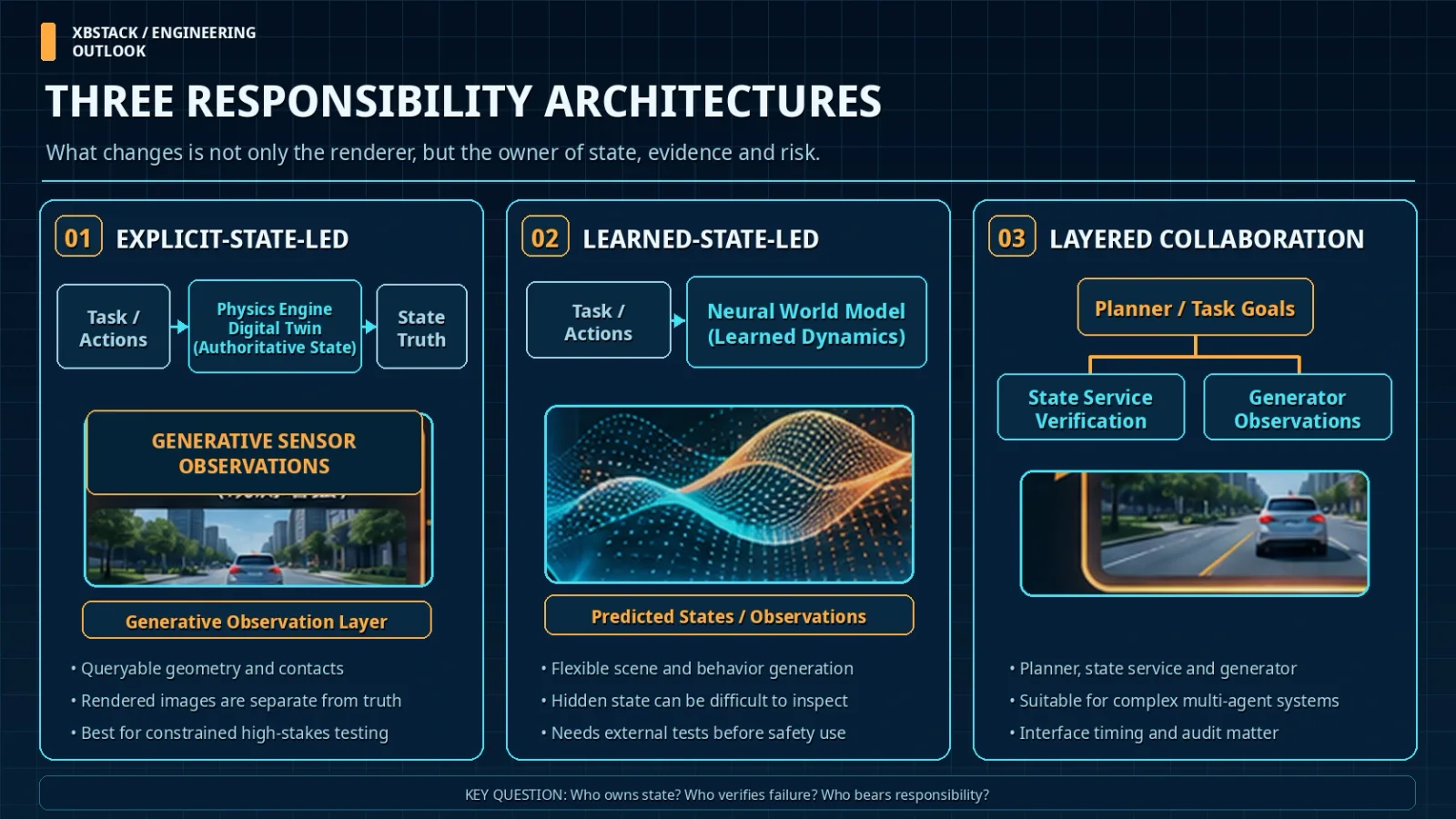
Figure 2 | Three responsibility structures: who owns state, who generates observations, and who validates results.
The November 2 NVIDIA Cosmos Framework and NIM engineering guide offers a different kind of artifact: selected released checkpoints, training and inference recipes, multimodal/sensor-conditioned generation, and containerized serving. In an autonomous-driving closed-loop example, a policy or user issues an action; AlpaSim updates simulation state; Cosmos3-Nano-Sim-Auto synthesizes subsequent camera and LiDAR observations; these are returned to the policy. That division of labor is consequential: a simulator owns the state transition, while a learned generator produces sensory observations. This architecture can make the source of certain ground-truth variables clearer. It does not magically guarantee that generated observations are consistent with those variables, nor that they will not mislead a downstream controller.
A direct Genie-versus-Cosmos performance leaderboard would currently be misleading. The former is chiefly shown through constrained-access interactive research experiences. The latter is an engineering ecosystem containing multiple model and workflow choices, not a single universally comparable model. Reproducible artifacts create an opportunity for independent measurement; they do not constitute proof of downstream task gains. NVIDIA lists approximately 58 GiB of VRAM for BF16, 44 GiB for FP8, or 31 GiB with FP8 and offloading for a particular Cosmos3-Nano generation setup. Those are NVIDIA’s configuration figures for that model/task combination, not measured by XBSTACK, and they should never be generalized as universal requirements for every Cosmos component.
For practical architecture reviews, XBSTACK distinguishes three responsibility structures. In an explicit-state-led system, a conventional simulator or digital twin maintains the principal geometric and physical state while a generative component synthesizes richer observations. In a learned-state-led system, the model predicts state and observations from interaction history, but its internal representation may not expose reliable contact or object queries. In a layered collaborative system, planners, language models, state services and generators share the workload, adding integration, timing, consistency and attribution risks. These are analytical categories for buyers—not formal product classes announced by either supplier.
| Question for an architecture or procurement review | Evidence to request | Decision if unavailable |
|---|---|---|
| Who determines object identity and physical state? | Queryable IDs, pose/contact/constraint state, provenance and version | Treat visual output as a demonstration, not authoritative physical truth |
| What happens if only the action changes? | Matched initial conditions, paired interventions, error distribution | Do not rely on it for safety-sensitive causal counterfactuals |
| Can it accurately represent failure? | Independently labeled failures, false-success rate, intervals and traces | Do not let the model’s rewards alone train a real-world controller |
| Does it generalize to new policies? | Held-out policies and tasks, closed-loop baselines and, where warranted, physical trials | Avoid claims of policy transfer beyond tested conditions |
| Does its business case survive verification? | GPU, simulator, data, integration, human checking, retry and risk costs | Do not use price per generated second as the business ROI |
These are conservative editorial acceptance principles, not a claim that an industry regulator has mandated these exact fields. The level of proof should follow the task. A creative prototype can be valuable with relatively modest physical validation; a control system that may injure someone cannot borrow that lower threshold.
An independent XBSTACK framework: three ledgers to reconcile before trusting an imagined world
The first is the state ledger: what remains true about entities and geometry over time? Does the same object retain identity after occlusion, camera motion or interaction? Can contact, position, velocity and constraints be inspected within the tolerance that matters to the task? An image-based model without explicit internal state may still be tested against externally annotated scenes, but that test has limits. If hidden physical variables cannot be queried, the correct report is “not independently observable,” not an invented estimate of ground-truth friction or force.
The second is the intervention ledger: does changing one action yield an appropriately different consequence? Keep the initial scenario, history, model revision and controllable randomness fixed, then change a single brake command, target position, grip strength or sensor delay. Evaluate not just the fluency of two videos but the reference relationship between near-miss and collision, stable grasp and dropped object, or correct avoidance and a constraint violation. Report action-response fidelity, severe constraint errors, ambiguous cases, and variability across seeds. Where a hosted model does not allow reproducible initial conditions, that is a limitation of what the experiment can conclude.
The third is the decision ledger: does the model improve the outcome of using an agent or policy? If policies A and B have independently measured performance, does the world model preserve their ranking? Does selection or training with its rollouts improve results against a credible baseline with comparable data and compute budgets? Can a controller exploit the learned environment’s weaknesses by choosing actions the model rewards incorrectly? Here, metrics such as policy-ranking agreement, decision regret, false-success rate, closed-loop task lift, and cost per validated result matter more than perceptual beauty.
The underlying scientific questions are not novel discoveries of XBSTACK. From Generation to Simulation reviews 200 representative works and reports that only 6 of 163 implementation papers in its sample exposed runtime queries for entity states or physical parameters. That is a statement about the authors’ surveyed sample, not the total number of products worldwide. How Should World Models Be Evaluated? already offers an L0–L7 evidence hierarchy from perceptual outputs to policy usefulness. WMEval compares matched actions in world models and Unity-based reference simulations to expose errors hidden by visual metrics. The proprietary editorial step is not rediscovering counterfactual evaluation, but translating that research into three actionable procurement ledgers, explicit stop/go criteria, and an economic accounting of verification.
An expert review must permit a negative answer. Without inspectable state or a reliable way to measure false success, retain the model for low-risk ideation or candidate data generation. If action fidelity and policy ranking are credible in a bounded environment, consider a shadow evaluation that does not authorize real-world safety actions. Only after task-specific independent evidence, externally verified closed-loop results and risk-adjusted cost analysis should the system be considered for increasingly consequential decisions. There is no universal “95% world-model certification threshold”: acceptable tolerances depend on the hazard, failure severity, regulatory obligations, and what the model is actually allowed to control.
A test that can catch a model cheating at success
Consider a warehouse-picking experiment. Freeze shelf geometry, object initial poses, controller interface and a set of reference trajectories. Build task slices for unobstructed picks, occlusions, unexpectedly displaced targets, friction changes and collision constraints. Replay candidate policies in a trusted explicit environment and a world-model environment, with matched actions wherever the interfaces support them. Capture observations, action histories, object poses, independent success labels, the model’s rewards, and collision or timeout events. This is a proposed protocol, not an experiment XBSTACK has run. No Cosmos 3 GPU evaluation or Genie 4 standardized public replay has been completed here.
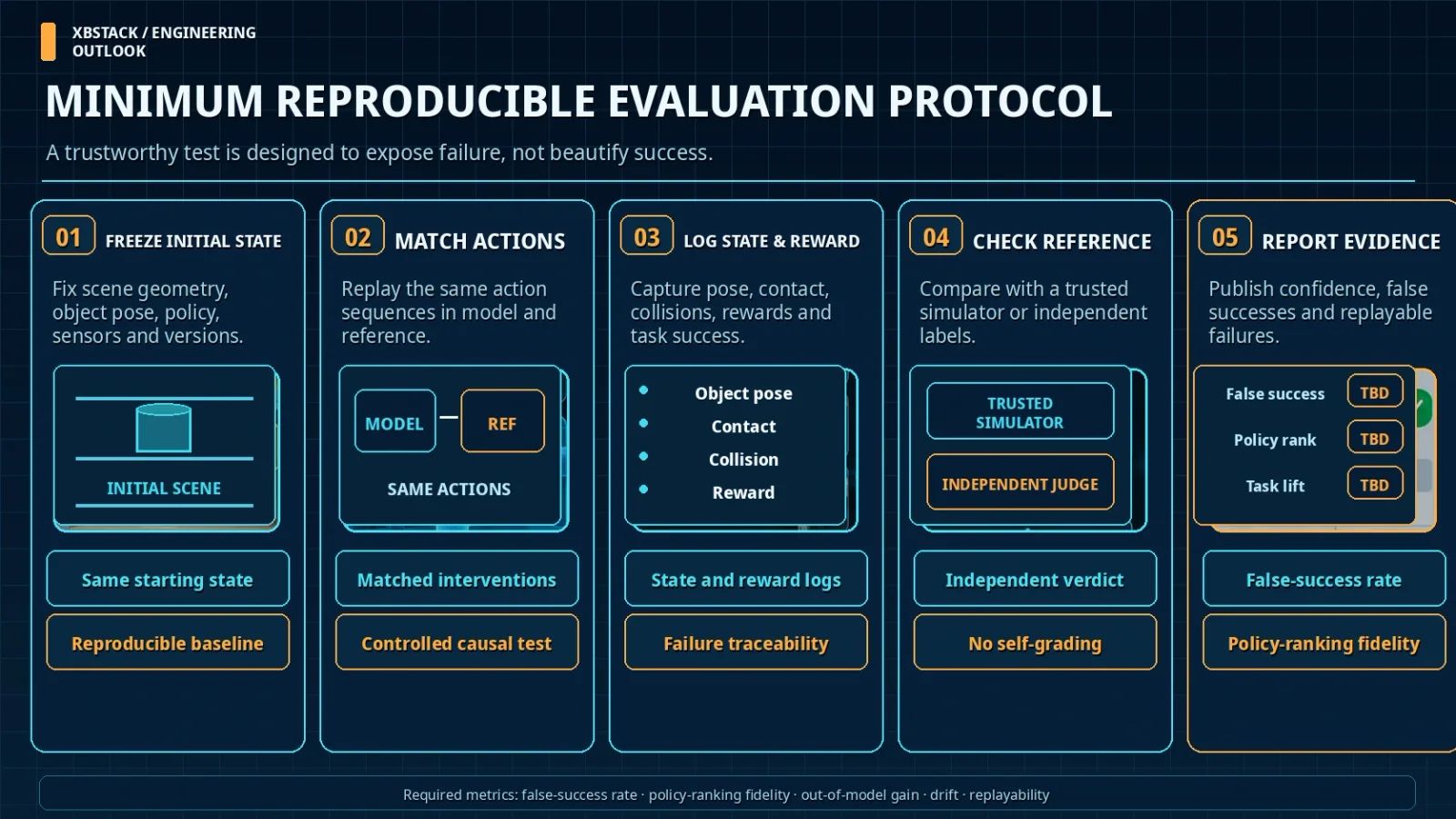
Figure 3 | Reproducible evaluation protocol. Any displayed numbers are illustrative, not XBSTACK experiments.
At least three reported quantities must not be collapsed into one score. False-success rate means the share of independently verified failures that the model and its reward/evaluator call successes; its denominator matters and it is not overall task accuracy. Policy-ranking fidelity asks whether model-based outcomes preserve comparisons between candidate policies over matched tasks, including held-out conditions and confidence intervals. Out-of-model closed-loop lift asks whether using the world model actually improves policy results in an independent environment or, for sufficiently mature applications, on real hardware. The third is the strongest evidence of decision value and usually the most expensive to collect.
State drift introduces another subtle failure. Suppose the generated world silently replaces an object’s identity late in a long interaction, yet the reward judge continues scoring a subsequent grasp as success for the original object. A single final-frame visual score may not flag the problem at all. Replayability therefore requires object identity, state history, timestamps, sensor synchronization, termination and reset semantics, and minimized failure traces. For a hosted system that does not expose those controls, it is better to report “independent replay unavailable” than imply stability from a few favorable demonstrations.
A useful objection to the entire video-centric debate is that not every useful world model needs to generate photorealistic video. Depending on the task, compact latent transitions, occupancy geometry, collision probabilities or structured state predictors may provide more decision value per unit of compute. If the buyer wants to rank safe motion plans rather than entertain a human viewer, an unglamorous predictor that reliably rejects a bad plan could be commercially superior to a breathtaking renderer. We should expect an increasingly differentiated market, not necessarily a single model category that dominates both creative experiences and industrial control.
Economic unit: not cost per generated video second, but cost per independently useful decision
Vendor materials legitimately emphasize model size, throughput, frames per second and serving efficiency. Buyers, however, need to know whether simulated rollouts reduce the total cost of selecting and validating a policy compared with collecting physical data, testing on real equipment, or improving a conventional simulator. An editorial cost-decomposition model is:
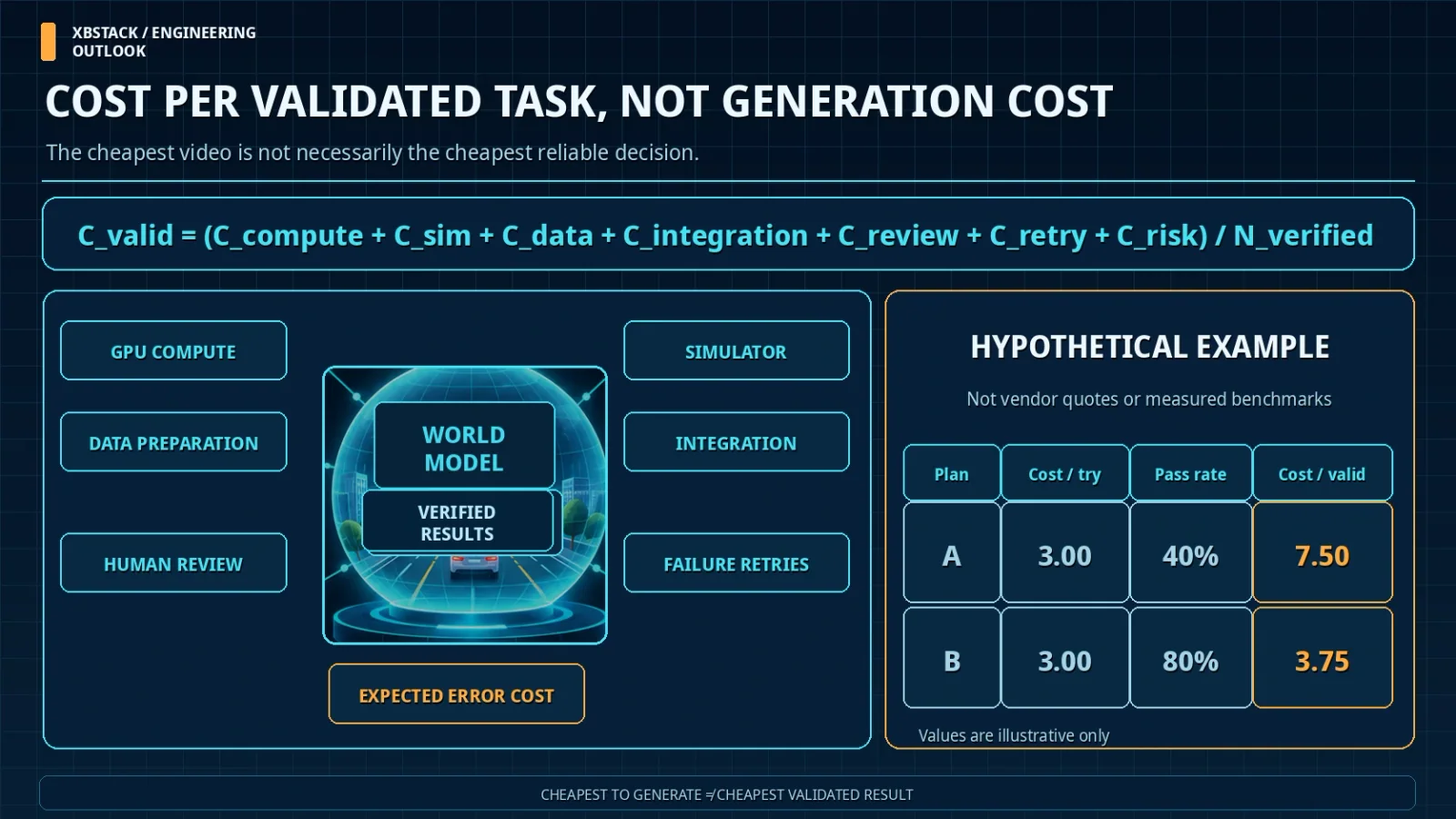
Figure 4 | Hypothetical unit economics: Plan A 3.00/40%=7.50; Plan B 3.00/80%=3.75. Not vendor pricing.
C_valid = (C_compute + C_explicit_sim + C_data + C_integration + C_human_review + C_retries + C_expected_error) / N_verified.
Here, N_verified includes only evaluation tasks that satisfy the buyer’s acceptance criteria and independent checks. C_expected_error represents anticipated downstream losses and rechecking caused by wrong rankings, false success or other consequential model errors. The formula is XBSTACK’s accounting heuristic, not a published universal benchmark or the measured economics of a named supplier. Its purpose is to stop teams from treating the cheapest generation call as necessarily the cheapest validated decision.
A deliberately hypothetical sensitivity calculation makes the distinction clear. Plan A costs one accounting unit in generation plus two units in review/integration per attempt, with 40 of 100 attempts passing independent validation. Its average cost per validated attempt is 300 / 40 = 7.5 units. Plan B spends two on generation and one on integration/review, but 80 of 100 attempts pass: 300 / 80 = 3.75 units. The provider with twice the generation cost has half the cost per validated result. These units and success rates are not real measurements of Genie, Cosmos or any commercial service. The example also assumes the accepted tasks have comparable decision usefulness; in practice one must separately test whether selected policies improve in reality.
This produces an economically meaningful and debatable forecast: the most profitable layer of the world-model stack may not be the generator, but the organization that owns trusted state interfaces, reproducible benchmark datasets, industry data contracts, and the means to detect bad simulated outcomes. That is not guaranteed. If foundation-model platforms cheaply embed structured state, reproducible intervention and verified safety checks, independent evaluation services may find their margins compressed. A defensible business moat would need cross-model independence, proprietary real-task ground truth, deep workflow integration, and demonstrably lower maintenance or verification cost. A dashboard that merely repeats vendor metrics is unlikely to be durable infrastructure.
2027–2030: three markets, not one inevitable takeover of physics engines
The first market is interactive creative work and previsualization. Film, game, educational and design teams pay for faster iteration, more expressive control and convincing preview experiences. They do not require every collision to satisfy an industrial accuracy threshold. Systems resembling Genie 4 may create early value here, provided access, licensing, latency, continuity and real product distribution mature. The competitive set includes game engines, design tools, creative suites and hosted generative platforms, not just robot simulators. This market can be economically important without implying a general-purpose physics engine has been replaced.
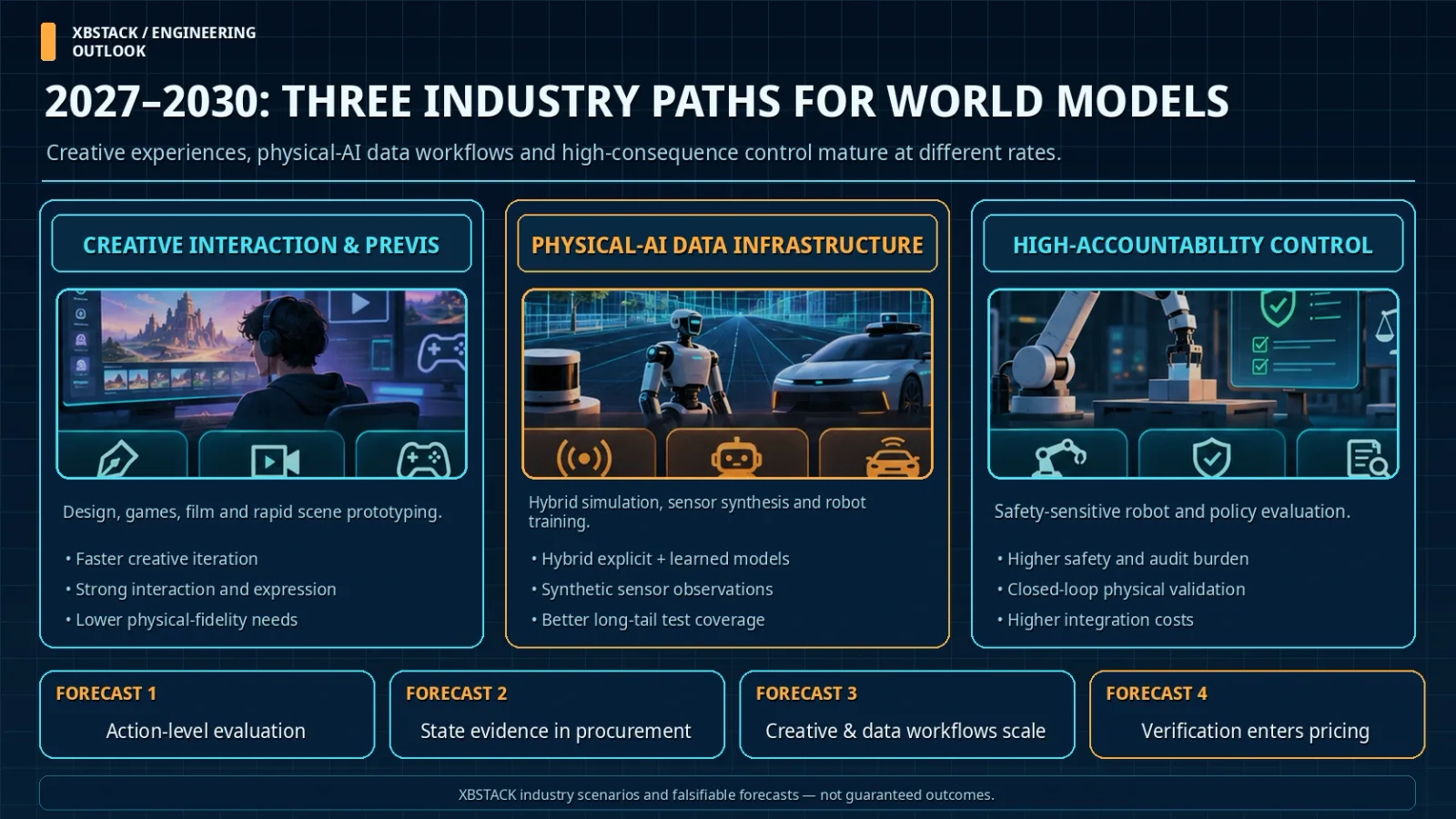
Figure 5 | Three possible commercial pathways, conditional forecasts rather than established market outcomes.
The second market is generative perception and data infrastructure for physical AI. Robotics and autonomous systems suffer from sparse long-tail scenarios and costly real-world data collection. A particularly plausible deployment is to let an explicit simulator provide trusted geometry and action state, while learned models generate varied visual, lighting, environmental or sensor observations. Some Cosmos closed-loop recipes already illustrate this division of labor. My medium-term preference is for such hybrid architectures in constrained engineering systems, not because pure generative simulation is impossible, but because externally owned state, replay and audit are easier to reason about. The thesis would fail if purely learned environments regularly outperformed hybrid baselines on independent, unseen physical tasks at comparable cost and risk.
The third market is high-liability policy evaluation and control. Here, buyers need calibrated uncertainty, severe-failure detection, distribution-shift monitoring, and defensible system-level evidence. Contract values could be high, but so are integration expenses, compliance burdens and responsibility for downstream behavior. It is an error to infer that a growing robotics market automatically yields strong margins for a particular world-model vendor. The path from impressive generated footage to renewed enterprise contracts contains expensive validation, deployment and legal steps.
Across all three, value distribution will remain contested. GPU vendors, foundation-model providers, domain data businesses, physics simulator operators, industrial OEMs and independent assurance platforms have different economics. Open checkpoints may improve replaceability at one layer while customer-specific dataset contracts and verification pipelines raise switching costs elsewhere. These trends can coexist. For smaller engineering teams, a genuinely useful product might be a narrow, testable replay or failure-analysis layer in an existing workflow—not an imitation of a frontier world model trained without the required data and compute.
Four forecasts with observable reasons to change our minds
Forecast one, by mid-2027: serious world-model evaluation will increasingly report action consequences as well as visual quality. Evidence would include published action fidelity, object state continuity, false-success measures, long-horizon drift, held-out interventions and closed-loop task gains across multiple model families. The forecast weakens if benchmark attention remains mostly perceptual and newly proposed action metrics fail to explain independent downstream outcomes. A larger number of papers alone is not evidence of enterprise adoption.
Forecast two, in 2027–2028: state inspectability and independent verification will become important purchasing criteria for high-consequence uses. Look for queryable state APIs, episode replay, fixed intervention protocols, out-of-distribution policy tests and external ground truth requirements in technical procurement. If end-to-end learned systems reliably deliver equivalent auditable real-world outcomes without exposing explicit state, the prediction should shift: verified results, not any particular state-interface design, are the moat.
Forecast three, during 2027–2029: creative interaction and bounded generative-perception workflows are more likely to reach sustainable revenue before broadly general, safety-grade robot worlds. Evaluate actual paid workloads, retention, savings in physical data collection, valid-task cost, and independent evidence of policy lift. Strong cross-hardware real-robot deployment at low cost would overturn that ordering. Product launch dates or demonstration views are not substitutes for recurring revenue.
Forecast four, in 2028–2030: infrastructure economics will increasingly price verification and liability alongside generation. The observable signal would be contracts and production reviews that require replayable evidence, error adjudication, state provenance, task-specific stop conditions and payment tied to validated outcomes. But successful foundation-model platforms might bundle verification so cheaply that stand-alone assurance vendors capture little value. If that happens, the engineering need for evidence would remain while our prediction about who profits would be wrong.
These dates are editorial monitoring horizons, not guaranteed milestones or statistical forecasts. They are not financial estimates or recommendations about the shares of companies involved in the field. The point of useful technical foresight is not to sound certain. It is to specify which observations would compel an expert to revise their judgment.
For builders: test whether the world can represent failure before trusting it to train success
If you build games, interactive scenes or film prototypes, prioritize turnaround time, controllable edits, continuity and licensing. If you build robot policies or safety-critical systems, ask first for inspectable state, failed-episode replay, paired interventions, independently judged success and improvement against existing simulator/real-data baselines. Do not let visually successful generations silently serve as ground-truth training rewards. Do not confuse downloadable checkpoints with affordable production inference on a consumer device. And where a vendor provides access only to selected demonstrations, state that access limitation instead of inventing physical accuracy scores.
My conclusion is not that learned world models have no future or that explicit simulation will never be disrupted. The decisive competition is moving to the boundary between generation, verification and responsibility. Models that let people see alternative futures may transform creative workflows first. Systems that let machines test alternatives, recognize failed actions honestly, and lower the cost of independently valid decisions may transform industrial workflows. Genie 4 and Cosmos 3 are signs of progress along different parts of that path. Without independent, cross-scenario evidence, it is too early to announce the end of reliable simulators.
XBSTACK should maintain this argument as a long-lived research asset, not rewrite it as a new product announcement whenever a model name changes. The watchlist should stay stable: state queryability, intervention fidelity, failure fidelity, closed-loop improvement, and cost per validated task. For broader AI industry scenarios, see XBSTACK’s 2027–2028 industry outlook. Questions about authorization, external actions and audit boundaries are addressed separately in the Agent Security hub.
Primary sources and intellectual precedence
- Google DeepMind (October 27, 2026), Genie 4: A new generation of world simulation and current model limitations.
- NVIDIA Developer (November 2, 2026), Build World Models for Interactive Simulation with NVIDIA Cosmos.
- Wang et al. (August 2026), From Generation to Simulation: How Far Are World Models from Being True Simulators?. The 200-work survey and the 6-of-163 runtime state-query figure are the authors’ scoped findings.
- Yu et al. (June 2026), How Should World Models Be Evaluated? A Decision-Making-Centric Position.
- Hu et al. (October 2026), WMEval: Evaluating Interactive World Models Grounded on Physical Simulations.
- Quevedo et al. (ICLR 2026), WorldGym: World Model as An Environment for Policy Evaluation and earlier research version.
- AMD Developer (October 20, 2026), Learning to Fail: Failure Fidelity and Training Stability for RL inside World Models. The 82.5% and 26% rates belong to its specified experiment, not the industry.
- Jena et al. (2026), Do World Models Make Better Robots? A Survey of Evaluation Benchmarks for Predictive Embodied Intelligence.
- Zhang et al. (October 24, 2026), WorldFailBench: Do World Models Understand Policy Failures?. Independent evaluation of failure reasons, stages and boundary conditions.
Evidence and originality statement: The three reconciled ledgers, the cost-per-verified-task procurement framework, the three responsibility architectures and the four monitored forecasts are XBSTACK’s editorial synthesis. Related concepts, including causal evaluation and decision usefulness, have established research precedents and are credited. This article reports no XBSTACK evaluation of Genie 4, Cosmos 3, real robot hardware, vendor commercial revenue or deployment performance. All numerical cost examples are hypothetical and labeled accordingly.
Next step: continue the Agent system
Full decision path →Choose the next architecture, tool, memory, evaluation, security, or production decision instead of starting over.

DISCUSSION
Questions, verification and corrections
Sign in to comment. Every new comment is reviewed before publication; while pending, it is visible only to you and the administrator.